 +91-99252 22822
 info@rajendrapulley.com

Industrial gears play a significant role in several machines used in power transmission since they allow for the movement of the revolution of one shaft to another while helping to control speed, torque, and direction. However, it is not enough to identify gears based on diameter size or tooth count.
In the first place, the gear needs to work well with the rest of the machine. Various factors come into play including the operating speed, the load, the torque, the arrangement of shafts, the space present, and the conditions of work.
While selecting the right gear, companies seeking the services of a credible Gear Manufacturer in Ahmedabad will surely realize that they need to gather a lot of essential information that will make the process much easier. Rajendra Pulley offers their clients quality industrial gears and other components for power transmission that meet the requirements of their application and different types of machines.
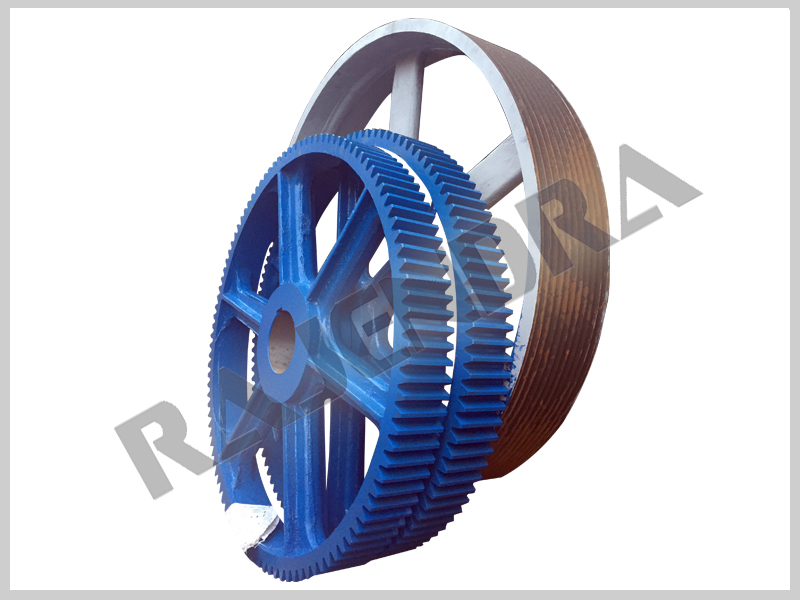
What Do You Need to Consider When Choosing an Industrial Gear?
There’s no standard gear specification that applies to all machines. Gears used in conveyor systems or production systems could have totally different requirements compared to gears used in lighter machines.
When choosing gears, it is sensible to begin with evaluating the characteristics of the machine in question. To be more specific, it is of key importance to look into the issue of how powerful the machine is, which speeds it can achieve, types of loads it handles, and how the gear relates to the other elements of the transmission system of the machine.
It is also handy to have information about existing growth, the size of the gear, machine design, and other specifications since sometimes it may prove difficult to create or find the gears suitable for the requirements.
Start With the Machine Requirements
The machine serves as the base for selecting industrial gear.
You should take into consideration how the piece of equipment functions during normal operation. Is it used throughout the day in continuous mode? Or is it operated intermittently? The load functioning on the equipment may either be constant or change during its operation.
To do it properly, one needs to remember about the transmission location. The position of shafts in the system, the speed ratio required, the amount of available installation space, and the contact between interdependent components will be determined by the position of the equipment.
Remember to think about the assembly of the gear as well, not merely the outside parameters.
Check the Gear Size and Dimensions
The importance of the size of the gear becomes obvious when it is necessary to replace it. A slight difference in bore size, tooth configuration, or face width and from the very beginning, the gear will not be working properly.
The application will influence what parameters must be measured for a new gear:
- Gear diameter
- Number of teeth
- Bore diameter
- Face width
- Keyway dimensions
- Shaft dimensions
- Gear width
- Arrangement for mounting
If the original gear can be found, it will give valuable reference points based on its dimensions. Photographs, sketches, samples of old gears and details about its shaft will also help the manufacturer to understand the requirements.
In custom gear manufacturing, the correct dimensions are even more necessary because the new part must match other parts of the machine.
The Role of Gears in Speed, Torque, and Load
- Gears not only serve the purpose of converting rotation, but they also manage the pressures created during the machine works.
- Before selecting a gear, the input speed, output speed, torque, and load must all be examined. The different types of gears have different specifications for heavy duty and light duty work.
- The necessary speed rations also should be taken into the account. The correlation between the driver gear and the driven gear will impact the operation speed of the machine.
- When you decide to address the gear manufacturer, the more information you provide about the motor power, input RPM, output RPM, torque, and loads the better it will be for you to choose the right specifications for the gear.
Consider the Material and Working Environment
The surrounding environment is also an important factor that matters.
Heavy machinery can work in the environment with dust, humidity, vibration, heat, and rapid changes of working conditions, which makes it necessary to think over the materials and construction of the gear.
Thus, the choice should be based on more than the physical size of the gear. The manufacturer should know how and for what purpose the gear will be used.
It is advisable to give relevant information about the working mode of the gear: information about temperature, working hours, loads, lubrication system, and surrounding environment conditions will help the manufacturer to get the better understanding of the future applications.
When Do You Need a Custom Gear for Industrial Equipment?
A standard gear may be acceptable for some machines, but often it is not a good choice when it comes to replacing an already existing part or changing the design of the machine.
Custom gears may be needed when the dimensions of an existing gear do not correspond to the standard dimensions of existing gears.
Alternatively, a custom-made gear may be needed when the machine has a non-standard shaft layout, unusual mounting dimensions, or special transmission ratio.
Some reasons to produce a custom gear are the following:
- To replace an obsolete or damaged gear
- To modify the machinery
- To install it in older machines having non-standard dimensions
- To create a new machine
- To meet some requirements related to the speed
- To satisfy special requirements with regard to the shaft or mounting arrangement
The manufacturer will need such details as gear diameter, bore size, number of teeth, face width, keyway, shaft dimensions, and the purpose of the gear.
Choosing the Right Gear Manufacturer
When looking for a gear manufacturer, it is important to ask questions about what the manufacturer can actually do for you.
When looking for a gear manufacturer in Ahmedabad, make sure that you consider factors such as manufacturing capabilities, available products, customization options, accuracy of dimensions, quality control procedures, and the manufacturer’s experience in the business of industrial power transmission.
It is also advisable to work with a manufacturer that is interested in understanding the application of the gear rather than just supplying a component according to basic measurements.
Rajendra Pulley is engaged in manufacturing industrial gears and other power transmission products that may be needed in various types of machinery. The firm does not simply rely on mandatory dimensions or other details while manufacturing. It makes sure that the future gear will work effectively in a specific environment.
What Makes Rajendra Pulley the Right Choice for Industrial Gears?
Rajendra Pulley makes industrial gears for many different applications in efforts for power transmission as well as for machinery.
The company is capable of making gears based on the specific need of its customers which is perfect for anyone looking to replace gas or need custom gear solutions.
Whenever one needs to replace old gear or needs a new part made for a particular machine, it is extremely important to provide all the required specifications, which allows the manufacturer to produce the needed component.
Conclusion
Choosing the right industrial gear means more than paying attention to the size. There are several other specifications of the industrial gear that must complement the speed, torque, load, shaft design, dimensions, and environment.
Before placing the order, do research on every technical specifications available. Gear sizes, machine sketches, images, shaft specifications, speed, motor power, and load specifications would help the manufacturer to understand what application is required.
When searching for Gear Manufacturers In Ahmedabad, it will be easier to find the appropriate gear if discussed in detail with the experienced manufacturer.
Frequently Asked Questions
One needs to begin with the application of the machine and check for dimensions of the gear, number of teeth, bore, face width, shaft arrangement, operating speed, torque, load, and environment considering whether the gear can be suitable for the application.
Yes. Custom production of industrial gears is possible in cases where the standard versions do not meet the needs of the machinery. Prior to production, data about the specifications of the gear required, the arrangement of the teeth, and components are required.
The following pieces of information may be helpful in ordering the replacement gear: the diameter of the existing gear, the amount of teeth, the size of the bore, the width of the face, the size of the keyway, the dimensions of the shaft, photographs, and layout drawings along with information about the machinery itself.
Yes, the input speed of the machinery, the output speed, as well as the speed ratio are very important when choosing a gear. The selected gear must fit the torque and the loads created at this specific speed.
Dust, humidity, vibration, temperature, lubrication conditions, and continuous operation are factors that can impact the operation of the gear. Awareness of these conditions is imperative so that the specifications of gear can be established with the manufacturer.
 +91 9925577359
 info@rajendrapulley.com