 +91-99252 22822
 info@rajendrapulley.com
Gears are used in many industrial machines to transfer motion from one shaft to another. They can also help control speed, turning force and the direction in which a machine moves.
Different machines require different types of gears based on the load, speed and type of power transmission involved.
For industries looking for a Gear Manufacturer in Bangalore, knowing the basic types of gears can help in finding a suitable option for their machinery. Rajendra Pulley manufactures and supplies different types of industrial gears for various power transmission requirements.
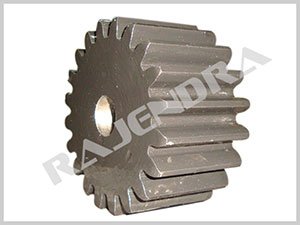
Understanding the Role of Gears in Machines
A gear works by transferring movement between toothed components. When one gear rotates, its teeth engage with another gear and make it rotate as well. The size, shape and arrangement of the teeth affect how the two gears work together.
In industrial work, gears may be required to handle continuous operation, heavy loads or different operating speeds. A suitable gear needs to match the working conditions of the machine rather than being selected only by its size.
Common Types of Gears Used in Industry
Different machines need different types of gears based on their design and how power needs to be transferred.
Spur Gears
Spur gears have straight teeth and are used when two shafts are parallel to each other. Their simple design makes them suitable for many power transmission applications.
Helical Gears
Helical gears have teeth cut at an angle. The angled teeth come into contact gradually as the gear rotates, allowing for smoother power transmission.
Bevel Gears
Bevel gears are used to transfer power between shafts that meet at an angle. They are commonly used when the direction of rotation needs to be changed.
Worm Gears
Worm gears consist of a worm and a worm wheel. They are commonly used where speed needs to be reduced and where the shafts are positioned differently from standard gear systems.
Double Helical Gears
Double helical gears have two sets of angled teeth arranged in opposite directions. This design is used in applications where smooth power transmission and the handling of higher loads are required. This design is used in applications where higher loads and smooth power transmission are important.
Rack and Pinion
Rack and pinion consists of a circular pinion working with a straight-toothed rack. The arrangement converts rotary motion into linear movement or the reverse, depending on the application.
Girth Gears
Girth gears are large gears used with heavy industrial equipment. Rajendra Pulley lists applications and gear products for industries such as ball mills, cement plants, fertilizer plants, mineral grinding and sugar mills.
What to Consider When Selecting a Gear?
Gear selection depends on several practical factors. The required speed, load, shaft arrangement, operating conditions and type of machine all need to be considered. The gear dimensions and tooth design also have to match the equipment in which the gear will be installed.
Heavy industrial machines often run for long hours under tough working conditions. That is why the gear needs to be the right size and made accurately. A properly made gear helps the machine run smoothly and keeps power transmission steady during regular operation.
Gears for Different Industrial Requirements
Gears are used across a wide range of industrial setups. The company’s website also lists industries such as ball mills, cement plants, fertilizer plants, brick plants, mineral calcination plants, mineral grinding, rice mills, rotary dryers, spray dryers and sugar mills among the industries it serves.
Why Proper Gear Selection Matters?
A gear is not just a toothed component fitted into a machine. Its design has a direct connection with how motion and power are transferred. A poorly matched gear may result in uneven movement, unnecessary wear or maintenance problems.
For this reason, the gear type, dimensions and operating requirements should be considered together. Gear Manufacturer in Bangalore can also help industries identify a gear suitable for their equipment and application.
Conclusion
From simple spur gears to large girth gears, each type has a specific role in industrial machinery. The right gear helps transfer motion and power according to the requirements of the equipment. Understanding the different gear types and their applications can help industries make more informed decisions when replacing an existing gear or planning a new machine setup.
Rajendra Pulley offers a range of gears and other power transmission products for industrial requirements. When looking for a Gear Manufacturer in Bangalore, the company can be contacted to discuss suitable gear requirements.
Frequently Asked Questions
Gears transfer power and movement from one shaft to another and can also be used to change the speed, turning force or direction of movement.
Spur gears have straight teeth, while helical gears have teeth cut at an angle. The tooth design is the main difference between the two.
Girth gears are used in large industrial equipment and are commonly associated with applications such as ball mills, cement plants, mineral processing and sugar mills.
Gear selection depends on factors such as load, speed, shaft arrangement, gear dimensions, operating conditions and the type of machine.
Yes, its listed gear range includes spur, helical, bevel, worm, double helical, cross helical, rack and pinion, pinion and girth gears.
 +91 9925577359
 info@rajendrapulley.com