 +91-99252 22822
 info@rajendrapulley.com
Gears may look like small parts when compared with the machines they operate, but their role in power transfer is important. A properly made gear helps transfer motion and power from one part of a machine to another while keeping the operation steady.
When gear quality is poor, problems like unusual noise, vibration, wear and frequent maintenance can affect the entire system.
When selecting a reliable Gear Manufacturer in Maharashtra can make a practical difference. The right gear needs to match the machine, operating conditions and required power transmission. It is not only about the size or shape of the gear, but also about how well it suits the application.
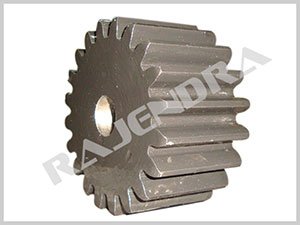
Gears Have Different Jobs to Perform
• Spur gears: Are commonly used where parallel shafts are involved.
• Helical gears: Can be used when smooth and continuous engagement is required.
• Bevel gears: Are suitable for transmitting motion between shafts positioned at an angle, while worm gears are used in applications where a change in speed and torque is required.
There are also double helical gears, cross helical gears, rack and pinion arrangements and pinion gears for different industrial requirements. Company lists these gear types along with girth gears as part of its product range.
Common Applications of Industrial Gears
Industrial gears are used in different types of machinery to transfer power and control movement. The type of gear and the way it is used can vary depending on the industry and the machine.
For example, heavy-duty gear systems can be found in cement plants, ball mills and mineral grinding applications. They are also used in fertilizer plants, brick plants, rice mills, rotary dryers, spray dryers and sugar mills.
This is why gear selection should be based on the actual working conditions rather than simply choosing a standard product. Load, operating speed, shaft arrangement and machine design all need to be considered before finalising the gear.
What to Look for When Selecting Industrial Gears?
A few basic points can help when purchasing gears for industrial machinery.
• Gear type: The type of gear should suit the movement and shaft arrangement of the machine.
• Size and dimensions: The gear needs to fit correctly within the available space and work properly with the connecting component.
• Material: The material should be suitable for the expected load and operating environment.
• Manufacturing accuracy: Proper dimensions and tooth geometry are important for smooth engagement and consistent operation.
• Application requirements: A gear used in a heavy industrial plant may have very different requirements from one used in lighter machinery.
For anyone looking for a Gear Manufacturer in Maharashtra, these factors can help when discussing the required gear with a manufacturer and matching it to the machine’s working conditions.
Why Manufacturing Quality Makes a Difference?
A gear is expected to work repeatedly under operating loads. Even small errors can affect how the gear profile fits together and may cause uneven wear over time. Careful manufacturing and regular quality checks help keep the gear accurate and ensure it lasts longer.
Rajendra Pulley has been involved in power transmission products since its establishment in 1993. Its product range includes gears along with pulleys, couplings, chain sprockets, gear boxes, girth gears and pedestals. The company also states that quality is monitored from raw material through finished products.
Selecting the right gear supplier involves more than simply looking at the product. It is useful to understand the manufacturer’s range, capabilities and experience with industrial applications.
Supporting Different Industrial Requirements
Industrial machinery does not always follow one standard design. Some applications require particular dimensions, gear arrangements or specifications based on the equipment.
The company’s gear range includes products such as spur gears, helical gears, bevel gears, worm and worm-wheel arrangements, double helical gears, rack and pinion, pinion gears and different large-diameter gears. The company also lists several girth gear products for industrial applications.
The right approach is to firstly understand the machine requirement and then select a gear that matches the working conditions. This can help avoid unnecessary replacements and maintenance issues later.
Conclusion
Good gear selection starts with understanding how the machine operates. Gear type, dimensions, material, load and operating conditions all have a role in determining whether a gear will perform properly.
Rajendra Pulley offers a range of power transmission products and industrial gears to meet the requirements of different types of machinery. Businesses searching for a dependable Gear Manufacturer in Maharashtra can consider the required application, product range and manufacturing capabilities before making a decision.
Frequently Asked Questions
Industrial gears include spur, helical, bevel, worm, double helical, rack and pinion, cross helical and pinion gears, depending on the application.
They are used in industries such as cement, fertilizer, mineral processing, rice mills, sugar mills, brick plants and other heavy industrial applications.
Accurate gear dimensions and tooth profiles help the connecting gears engage properly and support smoother machine operation.
The selection depends on factors such as load, speed, shaft arrangement, available space and the type of machinery.
Yes, Gear requirements can vary between machines, so the gear type and specifications should be selected according to the particular application.
 +91 9925577359
 info@rajendrapulley.com